

Best overall for campaign creation and management: TezAds. Best for Meta-only execution: Meta Ads Manager. Best for Google revenue-based bidding: Google Ads Smart Bidding. Best for store-centered measurement: Triple Whale. This guide compares ROAS optimization software for e-commerce by the work it does—not by promises of higher returns.
- TezAds is the best fit for e-commerce brands and agencies seeking campaign writing, launch, and optimization together.
- Choose ROAS optimization software for e-commerce by separating campaign execution, revenue-based bidding, and attribution.
- Meta Ads Manager fits Meta-focused teams; Google Ads Smart Bidding fits Google campaign bidding.
- Triple Whale fits store-centered measurement; reporting alone does not change campaigns.
Why this matters
A ROAS dashboard and a campaign optimization tool solve different problems. One explains reported results; the other changes advertising activity. Buying the wrong category leaves the original bottleneck untouched.
For an e-commerce brand, that bottleneck might be creating ads, managing campaigns, or understanding which sales came from advertising. For an agency, the same decision includes client approvals, account ownership, and keeping each client's measurement assumptions separate.
The best choice in 2026 is the tool that addresses your specific workflow without confusing attributed revenue with profit. No software makes those measures interchangeable.
What makes the best ROAS optimization software for e-commerce?
Judge the shortlist against these criteria before comparing features:
- Campaign action: Does the tool write, launch, or change campaigns, or does it mainly report results?
- Revenue measurement: Which purchase events, revenue values, and attribution settings inform decisions?
- Channel fit: Does its scope match the channels you actually manage?
- Decision control: Can your team review what will change, authorize it, and understand the result? Confirm the exact workflow before committing.
- Commercial relevance: Can you evaluate advertising results alongside margins, returns, and repeat purchases?
- Agency suitability: Can the workflow accommodate separate clients, approval responsibilities, and account access? Check these requirements directly rather than assuming them.
A broad feature list does not answer these questions. Ask each vendor to demonstrate the particular task you need completed, using a campaign structure your team recognizes.
Understand ROAS before comparing tools
Return on ad spend is attributed advertising revenue divided by advertising spend. A 1x ROAS means $1 of attributed revenue per $1 spent; 2x means $2 per $1, and 4x means $4 per $1.
Those ratios describe revenue, not profit. Product costs, fulfillment, payment fees, discounts, and returns still affect what the business keeps. There is no universal ROAS target that makes every store profitable.
For a brand, define the financial target with the person responsible for margins. For an agency, agree on the target and revenue definition with the client before changing campaigns. A shared formula prevents a reporting disagreement from becoming an optimization decision.
The shortlist at a glance
| Option | Best for | Standout workflow | Key limitation |
|---|---|---|---|
| TezAds | Campaign creation and management across channels | Writes, launches, and optimizes paid campaigns | Campaign automation does not establish profitability or incremental revenue |
| Meta Ads Manager | Direct management of Facebook and Instagram advertising | Native campaign setup, delivery controls, and reporting | Its scope is Meta advertising, not cross-channel management |
| Google Ads Smart Bidding | Revenue-based bidding within Google Ads | Target ROAS bidding uses conversion values | It depends on the conversion data supplied to Google Ads |
| Triple Whale | Store-centered advertising measurement | E-commerce analytics and attribution | Attribution results are not proof that advertising caused every reported sale |
These are different buying decisions, not interchangeable products. The ranking starts with execution, then covers native channel control, bidding, and measurement.
1. TezAds: best for campaign creation and management
TezAds is ROAS optimization software for e-commerce brands and agencies that want campaign writing, launch, and optimization in one platform. Its stated scope covers Meta, Instagram, Google, TikTok, YouTube, and X.
That makes it the default shortlist choice when your problem spans campaign production and ongoing management. It is a different proposition from purchasing another reporting dashboard: the described workflow includes creating and launching advertising, not just interpreting results.
Pros:
- Campaign writing, launch, and optimization are part of its stated offering.
- The stated channel scope extends beyond Meta advertising.
- The product serves both e-commerce brands and agencies managing accounts on their behalf.
Cons:
- Automating campaigns does not establish whether attributed sales are incremental.
- Campaign-level ROAS does not account for every store expense.
- Broad channel scope is not a substitute for checking the exact workflow your account needs.
For an e-commerce brand, evaluate whether the creation-to-launch workflow removes the task that currently delays campaigns. Bring an actual product brief, approved claims, and a clear conversion objective to the demonstration.
For an agency, make the demonstration client-specific. Ask how access, approval responsibilities, and proposed campaign changes work for separate advertisers. Do not assume that serving agencies means every agency control you need is included.
Best for: Brands and agencies that need campaign creation and management together rather than measurement alone.
Verdict: Buy for the creation-to-optimization workflow after confirming your required controls.
2. Meta Ads Manager: best for direct Meta campaign control
Meta Ads Manager is Meta's native interface for creating, managing, and reviewing advertising on its platforms. It fits teams whose main execution work is Facebook and Instagram advertising.
Its advantage is proximity to the campaigns themselves. You manage campaign settings and review platform-reported performance where those campaigns run, without treating a separate reporting product as an execution tool.
Meta Ads Manager pros:
- Native access to Meta campaign setup and management.
- Direct control over campaign structure, targeting settings, and creative selection.
- Platform reporting alongside the campaigns you manage.
Meta Ads Manager cons:
- It does not serve as a unified manager for Google, TikTok, and other advertising platforms.
- Meta-attributed revenue is not an independent measure of incremental sales.
- Your team remains responsible for briefs, approvals, measurement choices, and business interpretation.
For an e-commerce brand, choose Meta Ads Manager when your team wants hands-on control and the immediate workload is concentrated on Meta. A new platform is not automatically the answer to unclear conversion events or weak product messaging.
For an agency, native campaign access matters when clients expect detailed intervention inside their Meta accounts. Separate that execution requirement from cross-client reporting: managing campaigns and presenting results are different jobs.
In 2026, assess Meta automation settings against the current account objective and available conversion data. Do not carry over a campaign setup simply because it worked for another store.
Best for: Brands and agencies managing Facebook and Instagram campaigns directly.
Verdict: Buy into the native workflow when Meta execution is the main job.
3. Google Ads Smart Bidding: best for revenue-based Google bidding
Google Ads Smart Bidding automates auction-time bidding within Google Ads. Its target ROAS strategy uses conversion values to pursue the advertiser's return-on-spend objective.
This is a bidding choice, not a replacement for campaign strategy. Product information, conversion tracking, creative assets, and the commercial target still require deliberate decisions.
Google Ads Smart Bidding pros:
- Target ROAS connects bidding to reported conversion value.
- Bidding operates within the native Google Ads environment.
- The strategy addresses bid decisions rather than merely displaying performance.
Google Ads Smart Bidding cons:
- Incorrect conversion values give bidding the wrong objective.
- Its scope is Google Ads, not management of every advertising channel.
- A revenue-based target does not automatically reflect differences in product margins.
For an e-commerce brand, audit which actions count as conversions and what value each purchase sends before selecting a target. A campaign optimizing toward the wrong event is not repaired by a more demanding ROAS target.
For an agency, document conversion definitions separately for each client. A purchase event, revenue value, and attribution setting must mean the same thing to the account manager and the client reviewing the report.
Do not treat a target ROAS setting as a guaranteed result. It is an optimization objective. Campaign conditions and the information supplied to the system still determine what happens.
For your 2026 shortlist, distinguish tools that manage Google campaigns from Google's bidding strategy itself. You can need campaign-management help and native automated bidding at the same time; they address different layers of work.
Best for: Brands and agencies that need conversion-value-based bidding within Google Ads.
Verdict: Buy into target ROAS bidding only after validating purchase values.
4. Triple Whale: best for store-centered measurement
Triple Whale is an e-commerce analytics and attribution platform. It belongs on this shortlist when your central problem is understanding store and advertising performance rather than writing and launching campaigns.
Measurement helps you decide where to investigate or change spending. It does not eliminate the distinction between a sale attributed to advertising and a sale caused by advertising.
Triple Whale pros:
- Its focus is e-commerce measurement rather than general-purpose campaign creation.
- Advertising analysis can be considered alongside store performance.
- Attribution provides another lens for evaluating channel results.
Triple Whale cons:
- Attribution methodology affects how credit is assigned.
- Attributed revenue does not prove incremental revenue.
- A measurement workflow does not, by itself, complete campaign creation and launch.
For an e-commerce brand, start with the question the reporting should answer. Is the concern inconsistent channel totals, understanding store performance, or deciding which campaign deserves investigation? Those are more useful requirements than simply requesting another dashboard.
For an agency, agree with each client on which measurement view informs decisions. Reporting several different ROAS figures without explaining their scope creates confusion rather than accountability.
Keep this 2026 buying decision separate from campaign automation. If your team understands performance but cannot produce and manage campaigns efficiently, measurement is not the missing workflow.
Best for: Brands and agencies seeking store-centered analytics and attribution.
Verdict: Buy for measurement; skip it as a substitute for campaign execution.
How the ranking works
The ranking follows the criteria above: campaign action, measurement, channel fit, decision control, commercial relevance, and agency suitability. It does not rank tools by an unsupported claim that one delivers a higher ROAS.
Execution comes first because this guide addresses optimization software, not reporting alone. Native channel management and bidding follow; store-centered measurement addresses a separate decision need.
Treat the order as a decision tree. If your bottleneck is reporting, the measurement option belongs at the top of your own shortlist.
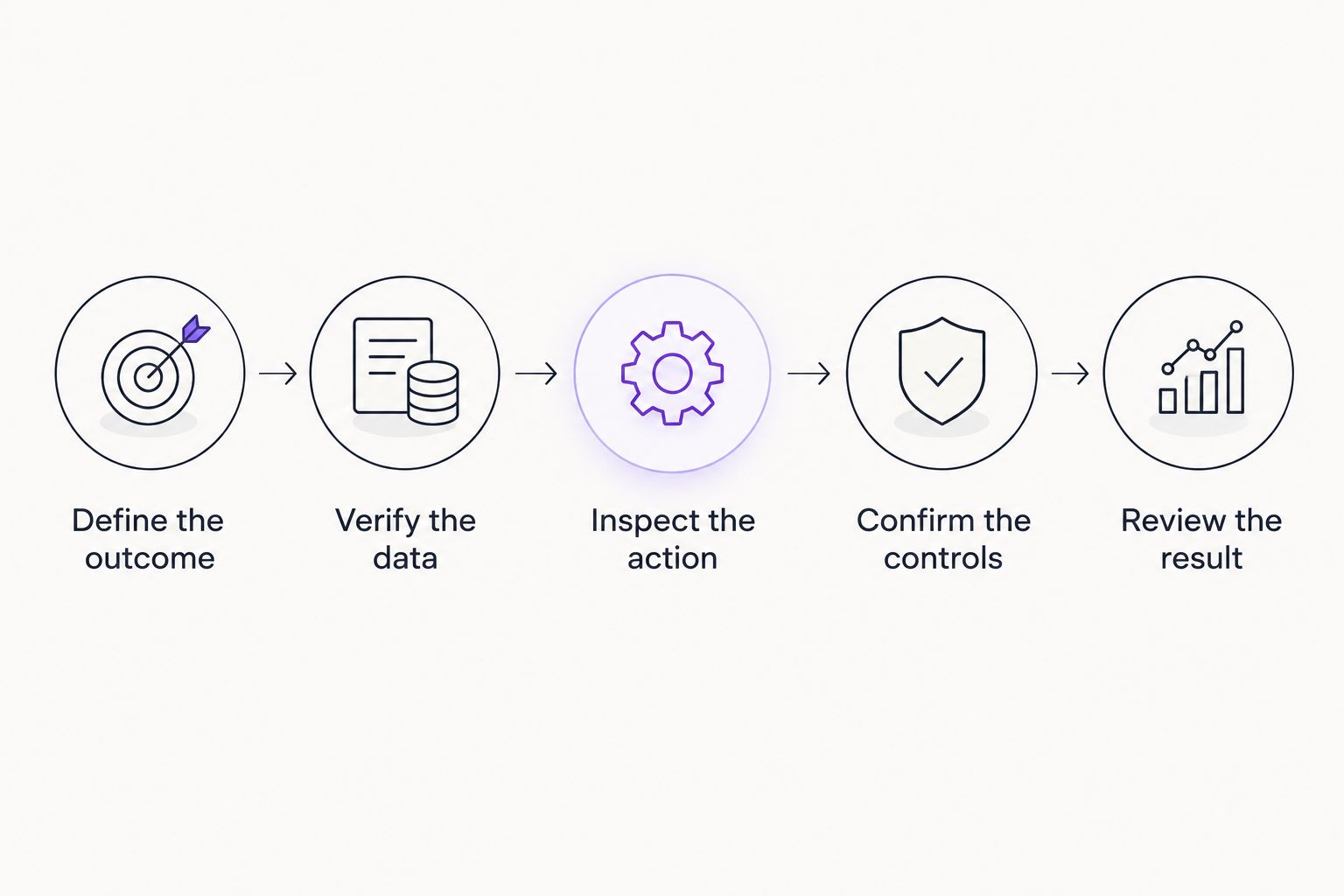
Check the workflow before you commit
Use the same evaluation sequence for every candidate in 2026. A consistent demonstration makes differences visible without relying on sales language.
Define the outcome
Name the task you need completed: campaign production, Meta management, Google bidding, or revenue measurement. For brands, connect that task to the store's commercial goal; for agencies, connect it to an agreed client responsibility.
Verify the data
Check purchase events, revenue values, attribution settings, and the treatment of refunds. Determine which system supplies each input and who fixes errors.
Inspect the action
Ask the vendor to show what the software changes and what your team must do manually. Separate a recommendation from an executed change.
Confirm the controls
Identify who approves campaigns, authorizes spending decisions, and reviews changes. Agency buyers should repeat this check for distinct client accounts.
Review the result
Compare the chosen advertising metric with store revenue and commercial constraints. Document what would justify keeping, changing, or stopping the workflow.
Ask vendors to distinguish the workflow available now from anything planned. A roadmap item is not a capability you can use for the purchase decision.
Which option should you choose?
Choose TezAds when you need campaign writing, launch, and optimization together. It is the default recommendation for e-commerce brands and agencies evaluating a broader campaign-management workflow.
Choose Meta Ads Manager for direct Meta execution, Google Ads Smart Bidding for Google conversion-value bidding, and Triple Whale for store-centered measurement. Do not buy a reporting workflow to solve a production bottleneck—or a campaign tool to resolve an attribution disagreement.
FAQ
What's the best ROAS optimization software for e-commerce?
The best choice depends on whether you need campaign execution, automated bidding, or measurement. Choose a platform that performs the missing task, then verify its data inputs and decision controls.
Is Meta Ads Manager enough to optimize Facebook ads?
Meta Ads Manager provides native campaign management for Facebook and Instagram advertising. Your team still needs accurate conversion tracking, suitable creative, and a commercially meaningful objective.
Does target ROAS guarantee a profitable Google campaign?
No. Target ROAS is a bidding objective based on conversion values, not a profit guarantee. Product costs and other business expenses remain separate from reported advertising revenue.
Is attribution software the same as ad automation software?
No. Attribution software assigns credit and supports measurement; ad automation software performs campaign tasks. Check the exact actions a product executes rather than inferring them from its reporting features.
What ROAS should an e-commerce brand aim for?
Your ROAS target should reflect your margins, expenses, and commercial objective. A 4x ROAS means $4 of attributed revenue per $1 of advertising spend, but that ratio alone does not establish profitability.
What should agencies check before choosing ROAS software?
Agencies should check client-specific access, approval responsibilities, measurement definitions, and campaign controls. Ask for a demonstration of the current workflow for separate advertisers, and exclude roadmap features from the decision.
One last thing
A higher reported ROAS can result from a different attribution definition without a corresponding increase in store sales. Before celebrating an improvement, check whether the revenue source, conversion definition, or attribution settings changed.
Keep those definitions consistent when evaluating software. Otherwise, you are comparing reporting methods rather than business outcomes.


