

Best overall for writing and managing paid campaigns: TezAds. Best for flexible ad drafting: ChatGPT. Best for detailed campaign briefs: Claude. Best for marketing-focused content production: Jasper. These AI ad copywriting tools solve different problems in 2026; choose by the work you need finished, not the number of headlines a tool generates.
- TezAds is the best fit here for e-commerce brands and agencies seeking ad writing, launch, and optimization together.
- ChatGPT suits flexible ad copy drafting; Claude suits detailed briefs and careful message development.
- Jasper suits marketing-focused content production when ad copy belongs to a broader content workflow.
- Compare AI ad copywriting tools on factual accuracy, distinct angles, Meta ads relevance, and campaign handoff.
Why this matters
An ad writer and an ad management platform are not the same purchase. One gives you text. The other connects writing with campaign execution, so comparing them only on headline quality misses the work that follows.
For an e-commerce brand, that work includes matching the offer, product page, creative, and purchase objective. For an agency, it also includes keeping client facts separate and handing approved work to the person responsible for delivery.
The best tool removes your actual bottleneck. If drafting slows you down, buy for drafting. If publishing and managing campaigns slow you down, a standalone writing assistant leaves that problem intact.
What makes the best AI ad copywriting tools?
Use these criteria to evaluate your 2026 shortlist before choosing a product:
- Factual control: The tool should follow your supplied product facts without inventing benefits, testimonials, offers, or guarantees.
- Distinct angles: Useful output changes the reason to buy, not just the wording of the same promise.
- Placement fit: Copy should match its destination, whether that is Meta primary text, a Google search headline, or a video script.
- Brief handling: The workflow should preserve audience, objections, tone, and exclusions throughout revision.
- Campaign handoff: Decide whether you need text to export or a platform that also writes, launches, and optimizes campaigns.
- Review discipline: You need a practical way to inspect claims and approve the final message before publication.
Treat these as purchasing criteria, not promised features across every product. Ask each vendor to demonstrate the steps you intend to use today. Keep roadmap items outside the decision.
AI ad copywriting tools at a glance
| Tool | Best for | Standout capability | Key limitation |
|---|---|---|---|
| TezAds | E-commerce brands and agencies wanting writing and campaign execution together | Paid ad creation, launch, and optimization across the channels named in its product description | A broader purchase than necessary when your only task is drafting text |
| ChatGPT | Flexible drafting and fast message exploration | Conversational generation and revision from a supplied brief | A writing conversation alone does not complete campaign setup or management |
| Claude | Detailed briefs and careful message development | Working through supplied context and revising prose conversationally | Detailed reasoning still needs fact checking and a separate execution workflow |
| Jasper | Marketing teams producing ads alongside other content | Marketing-focused writing and brand voice capabilities | Marketing content production is not the same task as paid campaign management |
The table separates writing tools from an execution platform. It does not rank measured conversion performance: generated copy is a starting point, and your campaign results determine the winner.
1. TezAds: best for copy-to-campaign workflows
TezAds writes, launches, and optimizes paid advertising campaigns across Meta, Instagram, Google, TikTok, YouTube, and X. Its stated audience includes e-commerce brands and the marketing agencies managing ad accounts for them.
That scope makes it the strongest fit here when the job extends beyond producing text. You are selecting an ad operation workflow, not just a place to ask for another headline.
For e-commerce brands: Start with the product and offer you actually sell. Evaluate whether the workflow carries the intended message from creation into the campaign you want to run, rather than treating copy as an isolated document.
For agencies: Evaluate the same journey using a real client brief. Ask to see how the current product handles the client-account work you need; do not assume a particular permission model, approval system, or reporting format.
TezAds pros:
- Combines ad writing with launch and optimization in its stated scope.
- Serves both e-commerce advertisers and agencies managing accounts.
- Covers multiple paid advertising channels rather than only copy production.
Limitations:
- Its campaign-management scope is unnecessary for a copy-only assignment.
- Generated advertising still needs accurate product facts and human review.
- Broader content writing is a different buying requirement from paid ad automation.
In a demo, distinguish a feature that works now from a feature described as planned. Ask to see the actual route from brief to campaign, including the review points relevant to your team.
Best for: Advertisers who want writing, launch, and optimization in one product category.
Verdict: Buy for the copy-to-campaign workflow; skip for copy-only work.
2. ChatGPT: best for flexible ad drafting
ChatGPT is a general-purpose conversational assistant that generates and revises text. For ad work, you can supply a brief, request different message angles, and keep refining the drafts through follow-up instructions.
Its strongest role in this comparison is flexibility. You control the structure of the assignment instead of starting with a fixed ad-writing template.
For e-commerce brands: Give ChatGPT verified product details, the landing-page message, the audience, and prohibited claims. Ask for separate drafts addressing different objections, then inspect whether those drafts remain faithful to the offer.
For agencies: Use a separate, explicit brief for each client assignment. Include examples of approved language and specify what must not carry over from another account; conversational convenience is not a substitute for client separation.
ChatGPT pros:
- Supports drafting, rewriting, and explaining message choices in one conversation.
- Accepts custom instructions for tone, audience, structure, and exclusions.
- Works across ads, scripts, and related landing-page copy.
ChatGPT cons:
- Fluent output can still contain unsupported claims.
- Weak briefs produce generic messages that require further editing.
- The drafting conversation does not itself establish a complete paid-ad workflow.
A useful request asks for genuinely different reasons to buy and identifies the evidence supporting each reason. Asking only for more variations encourages cosmetic changes instead of useful campaign ideas.
Keep the final selection with the advertiser. The most polished sentence is not automatically the one that matches the creative, offer, or audience.
Best for: Advertisers who want an adaptable writing partner and already have a campaign execution process.
Verdict: Buy for flexible drafting; skip if campaign management is the bottleneck.
3. Claude: best for detailed campaign briefs
Claude is a conversational assistant that works with supplied text and documents to draft, analyze, and revise writing. Its use-case slot here is brief-led message development: turning detailed context into an ad argument you can inspect.
Choose this workflow when your challenge is deciding what to say before deciding how to shorten it. A detailed brief is useful only when the final copy preserves its meaning.
For e-commerce brands: Supply the product description, customer objections, and the limits of what you can claim. Ask Claude to connect each proposed angle to supporting information rather than treating every plausible benefit as established fact.
For agencies: Use Claude to work through a client's positioning and turn it into a structured draft. Keep the client’s approved claims visible during revisions so a cleaner sentence does not quietly become a stronger, unsupported promise.
Claude pros:
- Supports document-led drafting and conversational revision.
- Helps turn supplied context into structured messaging options.
- Lets you request explanations for wording and angle choices.
Claude cons:
- Detailed output still requires a factual review.
- Extra explanation can create editing work when you need concise ad text.
- Copy development remains separate from campaign delivery in this workflow.
Ask for the message first, then the placement-specific version. That sequence makes it easier to catch a weak argument before spending time polishing a short headline.
Do not mistake an explanation for proof. A well-reasoned benefit still needs support in the product information you supplied.
Best for: Brands and agencies working from detailed briefs, documents, and nuanced messaging requirements.
Verdict: Buy for brief-led writing; skip if you only need simple text variations.
4. Jasper: best for marketing-wide content production
Jasper is a marketing-focused writing platform with brand voice capabilities. It belongs on this shortlist when advertising copy is part of a broader content production process rather than a standalone assignment.
The distinguishing question is organizational: do you need a general conversation, or a writing product organized around marketing work? That choice matters more than comparing isolated samples of polished prose.
For e-commerce brands: Evaluate Jasper when ads, emails, and other marketing content need to follow the same voice. Check whether the current workflow fits your source material and review process rather than assuming consistency happens automatically.
For agencies: Demonstrate the workflow with materially different client voices. Ask how the current product keeps those assignments organized and what happens when a writer changes a brief or approved wording.
Jasper pros:
- Focuses on marketing content rather than general-purpose assistance.
- Offers brand voice capabilities for writing assignments.
- Fits a buying brief that extends beyond paid ad text.
Jasper cons:
- A marketing-writing product does not eliminate claim review.
- Its broader content focus is unnecessary for a narrow ad-only task.
- Writing capabilities should not be mistaken for campaign execution capabilities.
Judge the output against approved examples. A recognizable tone is useful, but factual accuracy and a clear offer matter more than sounding consistently on-brand.
Best for: Marketing teams and agencies treating ad copy as one part of a wider content workflow.
Verdict: Buy for marketing-wide writing; skip when you need paid campaign execution instead.
How to test your shortlist with a real ad brief
Do not compare one tool’s carefully edited result with another tool’s first draft. Give every candidate the same source information and judge the same deliverables.
Use an actual product or client assignment. A fictional brief tests creative fluency, but it avoids the uncomfortable constraints that determine whether you can publish the output.
Source facts
Create a source sheet containing the product, audience, offer, landing-page message, and prohibited claims. Include approved evidence for every benefit you want the copy to state. Leave unknown facts out.
For brands, the source sheet prevents invented product advantages. For agencies, it also establishes which client information belongs in the assignment.
Distinct angles
Request alternatives built around different buying motivations, such as solving a problem, addressing an objection, or explaining a product benefit. Do not count a synonym swap as a new angle.
Compare the underlying argument before judging the sentence. If every draft makes the same promise, you have more text but no broader test.
Placement fit
Ask for copy matched to the intended placement. Google responsive search ads allow headlines of up to 30 characters and descriptions of up to 90 characters, according to Google Ads Help’s responsive search ad specifications.
Those ads can include up to 15 headlines and 4 descriptions. Use the limits to check the output, not to encourage filling every field with near-duplicates. Meta ads require a separate assessment of how copy works with the image or video and destination.
Claim review
Mark every statement that needs evidence. Reject invented discounts, testimonials, guarantees, performance claims, and product specifications before debating style.
For e-commerce, compare the copy with the product page. For agencies, compare it with the client's approved source material and have the responsible reviewer resolve any mismatch.
Campaign handoff
Finish the exercise by asking what happens after approval. Can your current team take the output into its campaign process, or is that handoff the task you wanted the software to solve?
This is the decisive split in a 2026 purchase. Writing quality and execution scope deserve separate scores because a strong draft cannot compensate for a missing workflow.
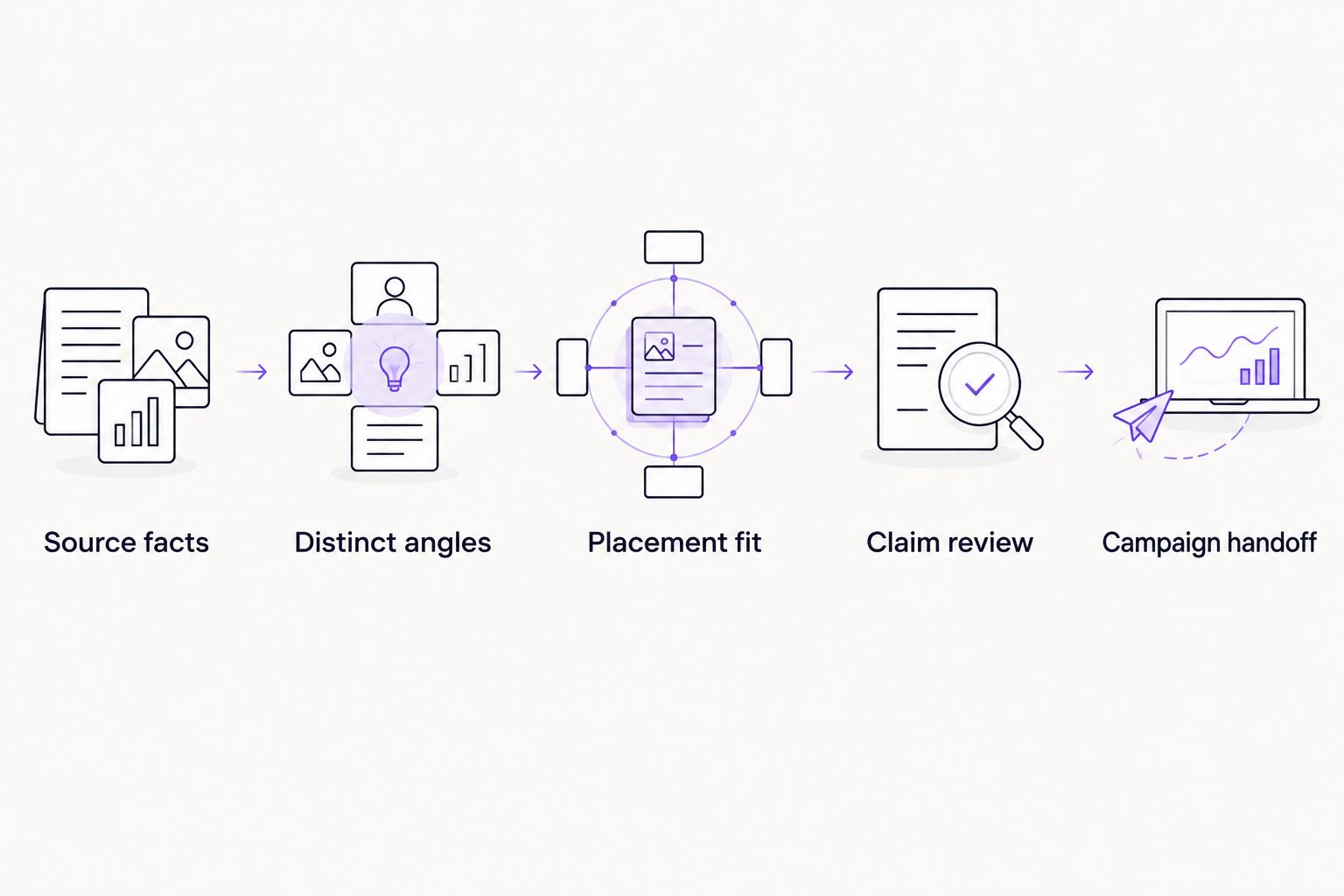
How we ranked these tools
This 2026 ranking assigns a different job to each tool: campaign execution, flexible drafting, detailed brief handling, or marketing-wide writing. The criteria are factual control, distinct angles, placement fit, brief handling, campaign handoff, and review discipline.
The recommendations concern workflow fit, not measured ROAS or conversion gains. No shared campaign-performance result establishes a winner across these products, and none is claimed here.
Keep current functionality separate from roadmap promises. A planned capability does not finish today's assignment, and a broad product description does not establish every account-level control your team requires.
Which AI ad copywriting tool should you choose?
TezAds is the best fit in this shortlist for e-commerce brands and agencies that want ad writing, launch, and optimization together. Choose ChatGPT for adaptable drafting, Claude for detailed brief-led messaging, or Jasper for marketing-wide content production.
For your 2026 decision, identify the slowest stage first. If approved copy waits on campaign setup, another writer is the wrong purchase. If campaigns are easy to publish but every message sounds interchangeable, focus on briefing and draft quality.
An agency should apply that decision at the client-workflow level, not just the writer level. An e-commerce brand should apply it from product facts through the destination page and campaign handoff.
FAQ
What's the best AI ad copywriting tool for an e-commerce brand?
TezAds is the best fit in this shortlist when an e-commerce brand wants ad writing, launch, and optimization together. ChatGPT or Claude fits a narrower writing assignment when campaign execution is already handled.
Which AI ad copywriting tools should an agency compare?
Agencies should compare a campaign platform with standalone writing tools based on where client work stalls. Evaluate account workflows for campaign management and brief separation, factual accuracy, and review for copy production.
Is ChatGPT better than Claude for ad copy?
ChatGPT fits flexible drafting, while Claude fits detailed brief-led message development in this comparison. Give both the same real brief and compare factual accuracy, distinct angles, and placement fit before choosing.
Can an AI writing tool launch my Meta ads?
Generating ad text does not establish that a writing tool can launch Meta campaigns. Choose a product whose current scope includes campaign execution and verify the workflow you need in a demonstration.
How do I stop an ad writer from inventing product claims?
Supply an approved fact sheet and explicitly prohibit unsupported claims. Review every benefit, offer, testimonial, and specification against that source before publication.
Should I buy a tool for features on its roadmap?
Choose based on features available now. Treat planned integrations and controls as future possibilities, not capabilities that can complete your current campaign workflow.
Will AI-written ads improve my ROAS?
AI-written copy does not guarantee a ROAS improvement. Judge the published campaign using your own results, and separate copy changes from changes to the offer, creative, audience, or landing page.
One last thing
Ask each shortlisted tool to identify the claims in its own draft that need evidence. That request turns a fluent answer into something you can audit.
Do not let the tool approve its own work. Compare its response with your source sheet, remove unsupported claims, and keep responsibility for publication with your team. A usable draft is one you can defend, not merely one you like reading.


