

Hootsuite is strong at coordinating social publishing, engagement, and reporting across accounts. That workflow is not the same as writing, launching, and optimizing paid advertising campaigns. The best Hootsuite alternative in 2026 is TezAds if you need paid ad automation; Buffer if you need focused social publishing.
- For Hootsuite alternatives focused on paid ad automation, shortlist TezAds rather than another social scheduler.
- Buffer suits publishing workflows; Sprout Social suits teams prioritizing engagement and social reporting.
- Later suits visual content planning; Meta Ads Manager suits direct control of Facebook and Instagram campaigns.
- Separate paid advertising from organic publishing before choosing a replacement.
Why this matters
Replacing Hootsuite starts with identifying the work you want to replace. Scheduling an Instagram post, answering a customer comment, and changing a campaign budget are different jobs. A platform that handles one does not automatically handle the others.
For an e-commerce brand, the decision is whether your bottleneck sits in content production, community management, or paid acquisition. For an agency, add client approvals, account access, and reporting responsibilities. Choose around those workflows—not around the longest feature list.
Hootsuite alternatives at a glance
This 2026 comparison separates social management from paid advertising. The alternatives below are not interchangeable, and the Hootsuite row gives you the baseline rather than treating every replacement as an upgrade.
| Tool | Best for | Standout workflow | How it differs from Hootsuite | Main trade-off |
|---|---|---|---|---|
| Hootsuite | Teams coordinating publishing, engagement, and reporting | Managing several social responsibilities together | The benchmark for a broad social management workflow | Broad social management is a different job from dedicated campaign automation |
| TezAds | E-commerce brands and agencies automating paid campaigns | Writing, launching, and optimizing ads | Paid campaign execution rather than primarily organic social management | Do not treat campaign automation as a substitute for your publishing and community workflows |
| Buffer | Teams prioritizing social publishing | Planning and scheduling posts | A publishing-centered alternative | Check whether its engagement and reporting workflows cover your requirements |
| Sprout Social | Teams prioritizing engagement and social reporting | Bringing social conversations and reporting together | Another broad social management option | Switching broad platforms still requires workflow migration |
| Later | Teams prioritizing visual content planning | Planning and scheduling visual social content | A content-planning-centered option | A visual calendar does not replace paid campaign management |
| Meta Ads Manager | Advertisers wanting direct Meta campaign control | Creating and managing Facebook and Instagram ads | Native paid advertising rather than cross-network social management | Meta campaign control does not cover your entire cross-network operation |
1. TezAds: best for paid ad campaign automation
TezAds is a paid ad automation platform for e-commerce brands and the agencies managing their advertising. Its stated scope covers campaign writing, launch, and optimization across Meta, Instagram, Google, TikTok, YouTube, and X. Choose it when the job is running advertising—not filling an organic content calendar.
For a brand, evaluate the path from a product brief to an active campaign and subsequent changes. For an agency, evaluate the same path within the client’s account, with clear responsibility for spend and approvals. Automation only earns its place when the working campaign matches the brief.
Where it shines
- Paid campaign execution: The stated workflow includes writing, launching, and optimizing advertising rather than stopping at content scheduling.
- E-commerce relevance: The platform explicitly serves brands selling online.
- Agency relevance: Agencies managing advertising accounts on behalf of clients are an explicit target audience.
- Cross-network scope: The stated platform coverage extends beyond Meta advertising.
Where it falls short
- This is a different category from an organic social management suite. Keep publishing, customer conversations, and campaign execution as separate buying requirements.
- Broad platform coverage alone does not establish that every campaign format or account workflow fits your needs. Demonstrate your specific Meta workflow before choosing.
- Automation does not remove your responsibility for the offer, creative approval, measurement setup, or spending decisions.
| Dimension | Paid ad automation platform | Hootsuite |
|---|---|---|
| Core purpose | Write, launch, and optimize paid campaigns | Coordinate social publishing, engagement, and reporting |
| Brand evaluation | Product brief through campaign execution | Content calendar through publishing and engagement |
| Agency evaluation | Client campaign execution and optimization | Client social management workflow |
| Replacement boundary | Advertising work | Broader social management work |
Best for: E-commerce brands and agencies whose bottleneck is paid campaign execution, especially when evaluating tools to create and manage Meta ads.
Verdict: Buy for paid ad automation after demonstrating your required campaign workflow; skip as an assumed all-purpose Hootsuite replacement.
2. Buffer: best for focused social publishing
Buffer is a social publishing platform built around planning and scheduling content. It is a direct candidate when your Hootsuite use centers on getting approved posts onto the right accounts. Keep the evaluation focused on publishing rather than assuming every broader social management requirement transfers unchanged.
For an e-commerce brand, test the process for preparing product posts and keeping the calendar organized. For an agency, test how a client’s drafts move through review and how account access stays separated. A clean calendar is useful only when the people responsible can complete their part of the job.
Where Buffer shines
- A publishing-centered workflow gives you a clear starting point for evaluating scheduling needs.
- Buffer fits a shortlist where content planning matters more than paid campaign execution.
- You can assess the replacement against concrete tasks: draft, review, schedule, and publish.
Where Buffer falls short
- Social publishing is not a replacement for managing paid advertising campaigns.
- Do not assume your existing engagement or reporting process transfers without checking the exact functions you use.
- Agencies still need to establish how client reviews, permissions, and reporting fit together.
| Dimension | Buffer | Hootsuite |
|---|---|---|
| Buying focus | Publishing-centered workflow | Broader social management workflow |
| Brand test | Prepare and schedule product content | Coordinate content, engagement, and reporting |
| Agency test | Move client content through review | Preserve the complete client social workflow |
Best for: Brands and agencies that primarily need social content planning and scheduling.
Verdict: Buy for publishing-led work; hold if engagement and reporting are essential until you have checked those workflows.
3. Sprout Social: best for engagement and social reporting
Sprout Social belongs on the shortlist when your replacement needs include social conversations, publishing, and reporting. It is closer to Hootsuite’s broad social management category than a dedicated advertising platform. That makes the decision a workflow comparison, not a choice between unrelated tools.
For an e-commerce brand, examine how your team handles incoming conversations and turns social activity into a useful report. For an agency, examine the client-specific reporting process and how team members work across accounts. Rebuilding familiar reports and assignments is part of the switching decision.
Where Sprout Social shines
- Publishing, engagement, and reporting belong within its established social management scope.
- It offers a relevant comparison when social conversations are a central operating responsibility.
- Its reporting focus makes it a candidate for teams that need to explain social activity to stakeholders.
Where Sprout Social falls short
- Moving between broad social management platforms still requires migrating working processes.
- Reporting features do not establish that your exact client deliverable is ready without configuration.
- A social management suite is not automatically a replacement for dedicated paid campaign automation.
| Dimension | Sprout Social | Hootsuite |
|---|---|---|
| Core category | Broad social management | Broad social management |
| Key evaluation | Engagement and reporting workflow | Existing publishing, engagement, and reporting workflow |
| Migration question | Can your team recreate its working process? | Does the current process already meet requirements? |
Best for: Brands and agencies that prioritize handling social conversations and producing stakeholder reports.
Verdict: Buy only when the demonstrated engagement or reporting workflow improves your current process; otherwise hold.
4. Later: best for visual social content planning
Later is a candidate when visual content planning and scheduling drive the decision. For an e-commerce brand, test how product imagery and campaign content fit into your publishing process. For an agency, test the handoff between the people preparing content and the client approving it.
Where Later shines
- Visual content planning is central to its established positioning.
- It fits a publishing shortlist for teams organizing image-led social content.
- The workflow is relevant when planning the content itself is the main problem.
Where Later falls short
- A visual publishing workflow does not manage the full paid advertising lifecycle.
- Calendar fit alone does not establish that engagement and reporting requirements are covered.
- Client approval requirements need their own evaluation, separate from how the calendar looks.
Best for: Brands and agencies prioritizing visual social content planning.
Verdict: Buy for a demonstrated visual publishing fit; skip if your main need is paid campaign automation.
5. Meta Ads Manager: best for direct Meta campaign control
Meta Ads Manager is the native option for creating and managing Facebook and Instagram advertising. It belongs in this comparison because a paid advertising problem does not always require another social management platform. In 2026, direct campaign control remains a distinct buying choice from cross-network automation.
For an e-commerce brand, evaluate how your team builds campaigns and reviews results. For an agency, evaluate the working process inside each client’s advertising account. This option puts the campaign interface at the center of the job.
Where Meta Ads Manager shines
- It directly handles Meta advertising campaigns.
- Campaign setup and management happen within Meta’s native advertising environment.
- It provides a clear baseline for comparing what an additional automation platform changes.
Where Meta Ads Manager falls short
- It does not replace cross-network social publishing.
- It is not a single campaign management environment for Google, TikTok, and X.
- Your team still needs a defined process for briefs, creative approvals, and reporting outside the campaign interface.
Best for: Brands and agencies wanting direct control of Facebook and Instagram advertising.
Verdict: Buy into the native workflow when Meta-only campaign control is the requirement; skip as a complete social management replacement.
Why people switch from Hootsuite
The useful reasons to switch are workflow mismatches—not unsupported claims about outages, billing changes, or results. Use these decision triggers to identify what you actually need to replace:
- You need campaign execution: Your required job includes writing, launching, and optimizing paid ads, not just coordinating social content.
- You primarily need publishing: Your team uses the calendar but does not need the same breadth of social management.
- You need a different engagement process: Your replacement must demonstrate a better fit for handling conversations and responsibilities.
- You need visual planning: Content organization is the bottleneck, rather than advertising execution.
- You need native Meta control: Your working process centers on Facebook and Instagram campaign settings.
For an agency, make the decision client by client rather than forcing every account into the same migration. For an e-commerce brand, identify the workflow that directly blocks execution. Neither audience benefits from replacing a functioning tool without a defined improvement.
Test the workflow, not the demo
A 2026 evaluation should distinguish functions you can use now from roadmap promises. Treat a planned integration, approval feature, or campaign capability as unavailable for your buying decision until you can demonstrate it. Do not substitute a sales presentation for the account workflow you need.
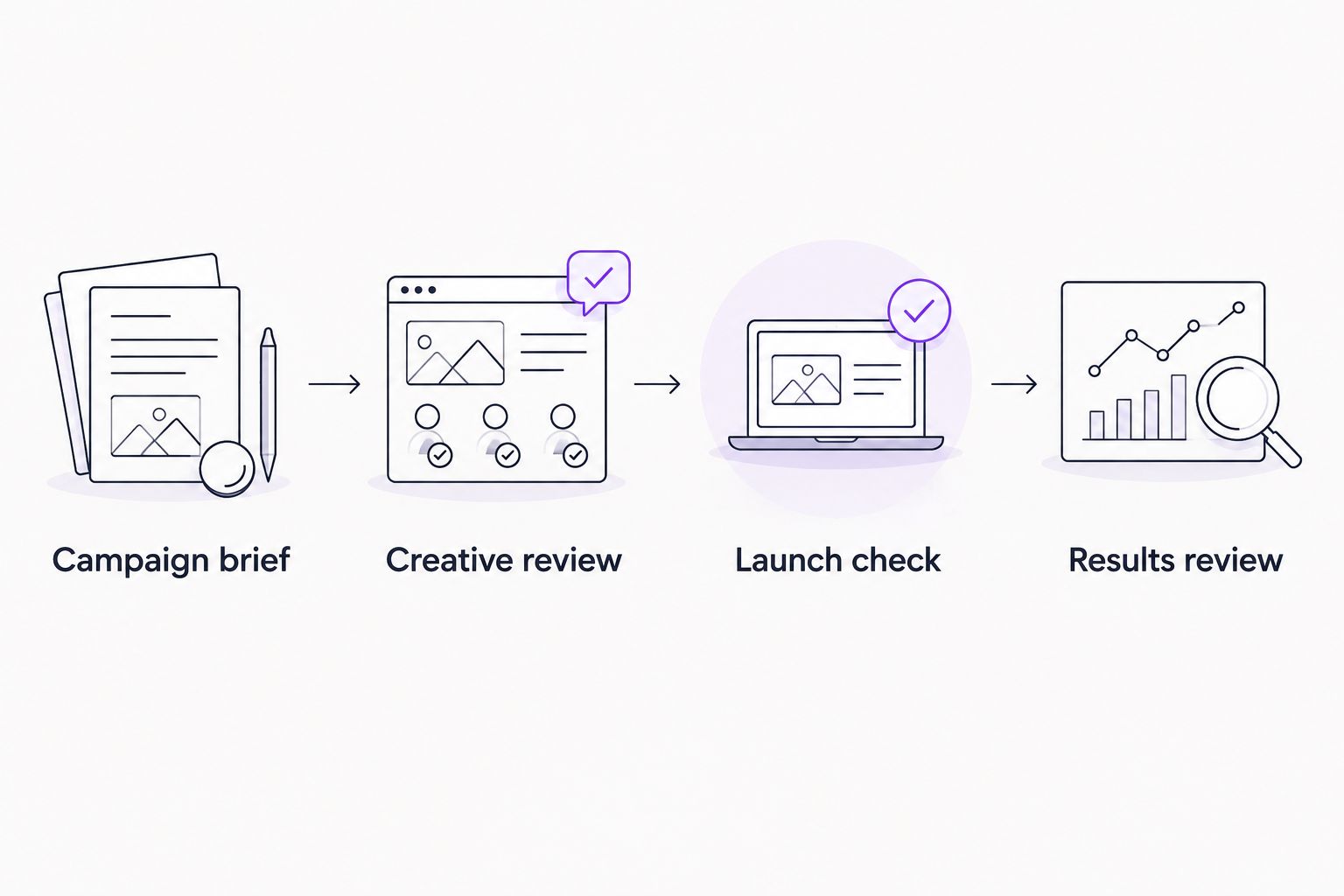
Use this sequence for both an e-commerce account and an agency client account:
- Campaign brief: Use 1 real campaign brief with a defined product, objective, audience, and spending boundary.
- Creative review: Review 2 draft variations and check that the copy matches the offer and approved claims.
- Launch check: Include 1 approval checkpoint before publishing a post or launching an ad.
- Results review: Confirm which results you can inspect and who decides the next change.
These are evaluation steps, not performance promises. For organic tools, substitute a publishing brief for the campaign brief and check the same handoffs. For paid tools, inspect the campaign destination, account, and settings before approval.
When staying with Hootsuite is the right call
Stay with Hootsuite when its publishing, engagement, and reporting workflows already meet your requirements. Adding paid campaign software does not require removing a working social management system. Replacement and supplementation are different decisions.
For agencies, preserve working client processes unless the replacement solves a specific problem. For e-commerce brands, separate the advertising decision from the content calendar decision. Keep the tool that handles the job; change the tool that blocks it.
FAQ
What's the best Hootsuite alternative in 2026?
The best choice depends on the workflow: TezAds suits paid ad automation, while Buffer suits focused social publishing. Sprout Social belongs on the shortlist for engagement and reporting, and Later for visual content planning.
Can a paid ad platform replace Hootsuite?
A paid ad platform replaces advertising work, not automatically the full social management workflow. Evaluate publishing, customer conversations, and social reporting separately before removing Hootsuite.
Is Buffer better than Hootsuite for an e-commerce brand?
Buffer is a relevant alternative when the brand primarily needs social publishing. Hootsuite remains a relevant option when publishing, engagement, and reporting need to work together.
Which Hootsuite alternative should an agency evaluate?
An agency should choose its shortlist around the client work it delivers. Compare social management tools for publishing and engagement, and paid campaign tools for advertising execution; test client access and approval requirements separately.
Should I use Meta Ads Manager or a campaign automation platform?
Use Meta Ads Manager when direct Facebook and Instagram campaign control is your requirement. Evaluate a campaign automation platform when you need help with campaign writing, launch, and optimization, and demonstrate the exact workflow before choosing.
Do I need to replace Hootsuite to automate Meta ads?
No, replacing Hootsuite is not a prerequisite for adding paid campaign automation. Keep a functioning social publishing and engagement process while evaluating advertising software separately.
How do I compare live features with roadmap features?
Base the buying decision on functions you can demonstrate in the required account workflow now. A planned integration or approval feature does not satisfy a current requirement.
One last thing
The best replacement can be no replacement at all. Keep organic social management and paid campaign execution separate in your 2026 buying plan, then decide whether you need one system, two systems, or a narrower publishing tool. That prevents a campaign automation purchase from creating a new community management problem.


