

Choose TezAds if you need software to write, launch, and optimize paid advertising campaigns; choose Plann if you need to plan and schedule organic social content. This 2026 comparison separates ad-account work from content-calendar work so you buy for the job you actually need done.
- TezAds vs Plann is primarily paid ad automation versus organic social planning, not a like-for-like feature contest.
- TezAds fits e-commerce brands and agencies that need paid campaign creation, launch, and optimization.
- Plann fits organic social planning and scheduling; do not treat a content calendar as a Meta ads manager.
- Check live capabilities, approval controls, and account coverage before buying either platform.
Why this matters
Creating an Instagram post and launching an Instagram ad are different jobs. The first belongs to your publishing calendar. The second requires a paid campaign, a budget, a destination, and a measurement setup.
That distinction matters when you compare tools in 2026. A good planning interface does not establish paid campaign capability, and an ad automation platform does not establish an organic scheduling workflow.
Buy for the task that consumes your team's time, not for the broad label of social media software. An e-commerce founder needs to distinguish publishing products from advertising them. An agency needs to distinguish managing a client's content calendar from managing that client's ad spend.
At a glance
| Dimension | TezAds | Plann |
|---|---|---|
| Best for | E-commerce brands and agencies managing paid campaigns | Teams planning and scheduling organic social content |
| Paid campaign execution | Writes, launches, and optimizes paid campaigns | Social planning is a different workflow from paid campaign execution |
| Standout feature | Paid campaign creation, launch, and optimization in one platform | Visual social content planning |
| Organic publishing | Do not assume organic scheduling from paid advertising capabilities | The more relevant choice for social planning and scheduling |
| Optimization focus | Paid advertising campaigns | Content planning rather than ad-account optimization |
| E-commerce fit | Advertising products through paid campaigns | Organizing product-related organic content |
| Agency fit | Managing paid advertising work for clients | Managing organic content planning work for clients |
| Pricing model | Evaluate software charges separately from media spend; verify billing terms | Evaluate software charges against publishing requirements; verify billing terms |
Paid campaign execution favors the ad automation platform
If your question is which tool creates and manages Meta ads, the paid advertising platform is the relevant choice. Its stated scope includes writing, launching, and optimizing campaigns across Meta, Instagram, Google, TikTok, YouTube, and X.
That scope addresses campaign execution, not just producing text for a post. You still need to establish exactly what happens between a draft and a live campaign: which settings you control, which changes require approval, and where you can stop automation.
For an e-commerce brand, use a product campaign as the demonstration task. Ask the vendor to move from a product brief to ad copy, campaign setup, launch review, and optimization. Keep the conversion goal and destination explicit throughout.
For an agency, use a client account rather than a generic demonstration. Check how the workflow handles client-specific instructions and who authorizes spending changes. Do not infer approval controls, account permissions, or audit history from the word automation.
Plann's social planning role solves a different problem. An organic publishing workflow is not evidence that a platform can configure and manage your paid Meta campaigns.
Organic planning favors Plann
Plann is the better fit when your main task is organizing organic social content. Visual planning and scheduling address what you will publish and when, rather than how you will allocate advertising spend.
For an e-commerce team, that means organizing product posts, educational content, and campaign-related organic messaging. A content calendar helps you see the publishing plan before you commit to it. It does not replace the paid campaign that promotes an offer.
For an agency, the equivalent task is keeping a client's organic publishing work organized. Demonstrate your actual planning process before purchasing, including the review steps your team requires. Do not assume a particular approval feature or client permission structure without seeing it.
The limitation is the category boundary. If your main problem is changing paid campaigns or managing advertising performance, a social planning tool is not the right substitute.
The reverse also applies. Paid ad automation is not proof of organic scheduling. If publishing consistency is the bottleneck, assess a publishing workflow rather than buying campaign automation and expecting it to cover the calendar.
Creative work has different finish lines
An ad draft and an organic post can start with the same product brief. They do not end in the same place.
For paid advertising, the creative belongs inside a campaign with an objective and a destination. The writing needs to match what the shopper sees after clicking. Campaign launch and optimization are part of the job, not separate details to ignore during the comparison.
For organic publishing, the draft belongs inside a content plan. Its usefulness depends on the message, presentation, and publishing context. Visual planning is relevant here because you are arranging content rather than configuring paid delivery.
Use the same product brief to assess both workflows in 2026. Ask for a draft that accurately reflects your offer, then follow the work to its endpoint. Does the task finish with a scheduled organic post or with a paid campaign ready for review?
Neither endpoint is inherently better. The winner is the tool that completes the task you assigned. Do not score an organic planner poorly for lacking the paid workflow you should have selected elsewhere, or reward an ad platform for capabilities your publishing team does not need.
Paid optimization favors the campaign-focused choice
Paid campaign optimization is explicitly part of the ad automation platform's scope. That makes it the closer match when you want software involved in managing advertising performance after launch.
For a store owner, the practical question is how optimization relates to the sales objective. Ask which inputs drive changes and which actions remain under your control. A useful demonstration explains the action, its reason, and its consequences for the campaign.
For an agency, control matters alongside execution. Establish how you review changes, preserve client instructions, and investigate a result. These are buying requirements to verify, not features to assume.
Plann's planning workflow addresses a different kind of improvement: organizing what you publish. Do not equate publishing activity with paid campaign optimization. A scheduled post does not, by itself, change an ad campaign's budget or delivery settings.
Automation capability is not a performance guarantee. Neither the comparison nor a demonstration establishes a promised ROAS, sales increase, or reduction in acquisition cost. Judge the workflow separately from claims about business results.
Both fit e-commerce work, but at different stages
E-commerce brands need both product communication and customer acquisition. These tools address different parts of that work, so the category verdict is a tie only when you define the jobs separately.
The paid advertising option fits a brand that wants campaign creation, launch, and optimization. Plann fits a brand organizing organic product content. Neither role makes the other unnecessary by definition.
If you are the founder doing both jobs, write down the task you repeatedly postpone. Is it preparing and managing campaigns, or keeping the publishing calendar organized? That answer is more useful than comparing long feature lists with unrelated capabilities.
If different people own the two jobs, involve both in the purchase decision. Your paid media lead should evaluate campaign execution. Your content lead should evaluate planning and scheduling.
Do not buy both automatically. First establish whether each tool replaces an existing process, closes a specific gap, or adds another handoff. A clear division of work is a stronger reason to use two tools than a vague desire for more automation.
Both fit agency work; the service determines the winner
For agencies, the decision begins with what you deliver to clients. Paid advertising management and organic social management are separate service responsibilities, even when one team handles both.
A paid media agency should evaluate campaign execution and optimization. A social content agency should evaluate planning and publishing. An agency offering both needs a defined boundary between the workflows.
Give each vendor the same operational questions:
- Who prepares the work, and who approves it?
- Which client account does the work affect?
- What can a team member change without additional approval?
- How do you inspect the completed work?
- What happens when a client changes direction?
These questions do not establish that either product includes a specific permission system, reporting format, or client portal. They establish what your agency needs to verify.
Neither product wins agency suitability in the abstract. The paid campaign tool wins the paid media assignment; the social planner wins the organic content assignment. A broader agency should assess each against its own service workflow rather than choosing one company-wide winner by default.
Pricing: separate the software bill from the work it covers
Compare current billing terms directly in 2026. Do not assume either product charges by user, account, workspace, or usage without checking the current offer.
For paid advertising, keep software charges separate from media spend. Your total operating decision includes both, but they pay for different things. Check what campaign capabilities are included and whether the billing terms change with your intended usage.
For organic planning, compare the software charge against the publishing work you need covered. Check account requirements, team access, and the capabilities included in the option you are evaluating.
The model matters because predictability and flexibility can pull in different directions. A fixed charge is easier to budget only when its included scope fits your workload. Usage-linked charges need to be tested against that workload before you treat them as economical.
That is a buying framework, not a claim about either vendor's current billing structure. The useful comparison is the cost of completing your workflow, including any separate tools you still require. A lower software bill does not settle the decision if it covers the wrong task.
Verify live features with a task-based demonstration
A 2026 purchase should rest on functionality you can use now. Treat an announced integration or planned feature as unavailable for the purchase decision until the vendor demonstrates it in the product.
Use 1 campaign for the paid workflow and 1 publishing calendar for the organic workflow. These are demonstration requirements, not performance benchmarks. For an agency, attach each task to 1 client account so the demonstration reflects account-specific work.
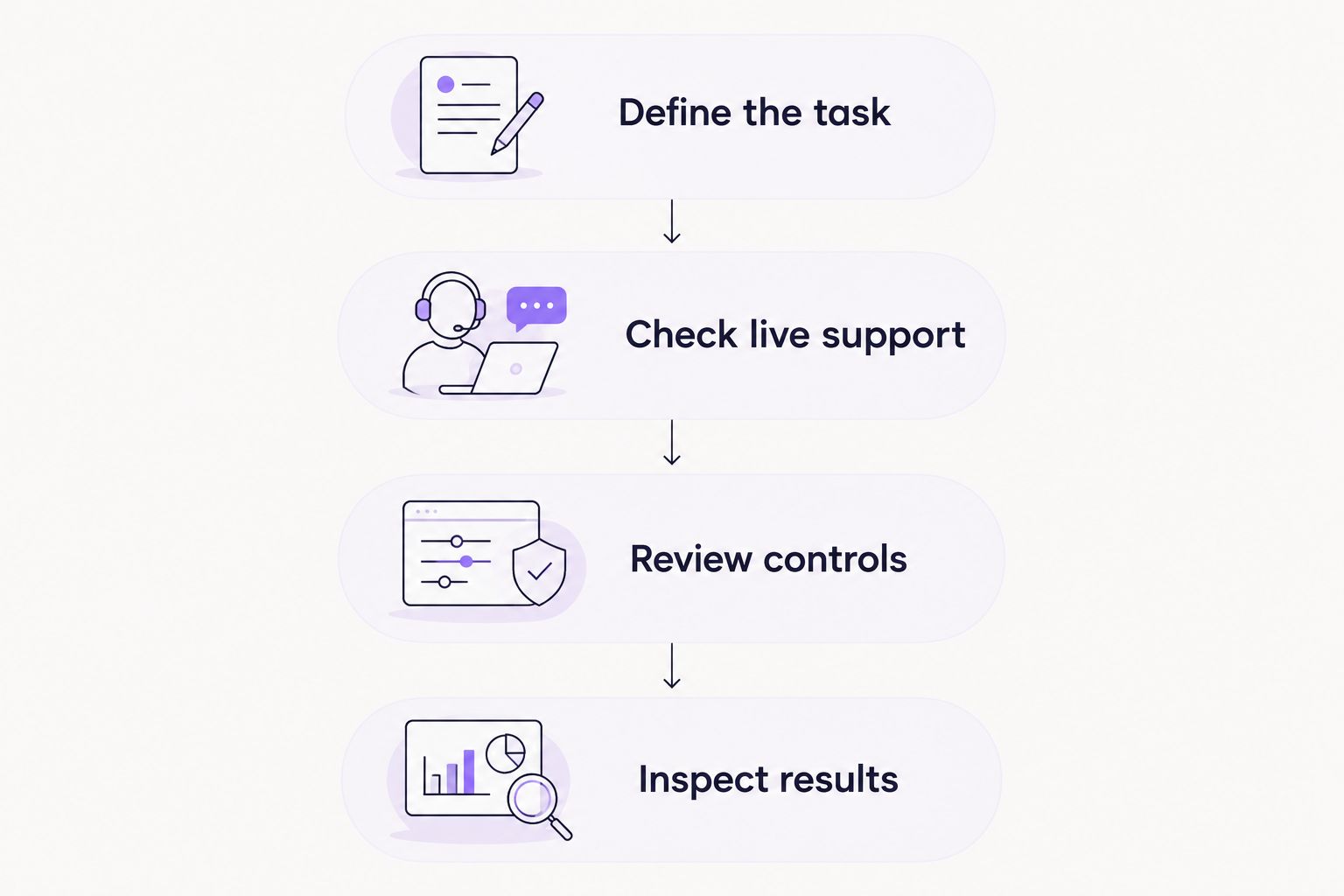
Follow these checkpoints in order:
- Define the task: State whether the outcome is a paid campaign or scheduled organic content.
- Check live support: Confirm the required channel and action work now, rather than appearing only on a roadmap.
- Review controls: Inspect the settings and approvals your team needs before anything goes live.
- Inspect results: Verify where you review the completed work and how you make corrections.
Keep the exercise narrow. A convincing demonstration completes your task without relying on a promised future feature or an unexplained manual workaround.
Final verdict: choose by the work you own
Choose TezAds if you own paid acquisition
TezAds is the better fit for e-commerce brands and agencies buying paid ad automation, not an organic content calendar. Choose it when campaign writing, launch, and optimization are the work you need addressed.
The limitation is scope: do not assume organic scheduling, specific approval controls, or unverified integrations. Make the live demonstration establish the capabilities your team requires.
Choose Plann if you own organic publishing
Plann is the better fit for a content lead or social media agency organizing organic social planning and scheduling. Choose it when your backlog is publishing work rather than paid campaign management.
The limitation is the same distinction in reverse: do not treat visual content planning as evidence of paid Meta campaign execution.
| Dimension | Winner |
|---|---|
| Best for | Paid acquisition: campaign automation; organic publishing: Plann |
| Paid campaign execution | Campaign automation |
| Standout feature | Different strengths: campaign execution versus visual planning |
| Organic publishing | Plann |
| Optimization focus | Campaign automation for paid advertising |
| E-commerce fit | Tie by role: paid campaigns versus organic content |
| Agency fit | Tie by service: paid media versus organic social |
| Pricing model | No winner without current billing terms and a defined workload |
FAQ
Is TezAds better than Plann for Meta ads?
TezAds is the closer fit for Meta ads because its stated scope includes writing, launching, and optimizing paid campaigns. Plann's social planning role addresses organic content rather than establishing paid campaign capability.
Which is better for planning Instagram posts?
Plann is the better fit for organizing organic social content. Evaluate its current planning and scheduling workflow against the publishing tasks your team needs completed.
Can a social content calendar replace a Meta ads manager?
No. Organizing organic posts is a different job from configuring and managing paid campaigns, budgets, and delivery settings.
Which tool should an e-commerce brand choose?
Choose the paid campaign platform for advertising execution and the social planner for organic publishing. Identify the task your store needs addressed before comparing features.
Which option is better for a marketing agency?
The winner follows the agency's service: campaign automation for paid media, or Plann for organic social planning. Verify client-specific controls and account workflows rather than assuming them.
How should I compare the pricing?
Compare current software billing terms against the work each product covers. Keep advertising media spend separate from software charges and include any additional tools your workflow requires.
Should I count roadmap features in a 2026 comparison?
No. Base the purchase on live functionality demonstrated in the product; an announced integration does not complete your current workflow.
Do I need both an ad tool and a social planner?
You need both only if separate paid advertising and organic publishing requirements justify them. Define who owns each task and what each tool replaces before adding another system.
One last thing
Give the final decision to the person accountable for the work, not the person most impressed by the demonstration. A content lead should judge the publishing workflow; a paid media lead should judge campaign execution.
Then ask one final question: What exactly will we stop doing manually after buying this? If the answer does not name a concrete task, the purchase is not ready.


